Concrete Calculator
Calculate the volume and weight of concrete needed for your construction project.
Calculate concrete for slabs, columns, stairs, and more
Support for feet, inches, meters, and other units
Get volume in cubic yards/meters and weight estimates
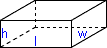
📐 Calculation Formulas & How It Works
1 Slab / Square Footings / Walls
Example: A 10 ft × 10 ft slab with 4 inches thickness:
For rectangular shapes like slabs, walls, or square footings, multiply the three dimensions together. Remember to convert all measurements to the same unit before calculating.
2 Column / Round Footings / Holes
Example: A round column with 12 inches diameter and 8 ft height:
Volume = 3.14159 × (0.5)² × 8 × 1 = 6.28 ft³ ≈ 0.23 yd³
For cylindrical shapes, we use the formula for the volume of a cylinder. First calculate the radius (diameter ÷ 2), then square it and multiply by π and the height.
3 Circular Slab / Tube
Example: A tube with 10 ft outer diameter, 8 ft inner diameter, and 4 inches height:
Inner Volume = 3.14159 × (4)² × 0.333 = 16.76 ft³
Concrete Volume = 26.18 - 16.76 = 9.42 ft³ ≈ 0.35 yd³
For hollow cylindrical shapes, calculate the volume of the outer cylinder and subtract the volume of the inner cylinder (hollow space).
4 Stairs
Why this formula? Each step accumulates height:
Step 2: Run × (2 × Rise) × Width
Step 3: Run × (3 × Rise) × Width
...
Sum = Run × Width × Rise × (1+2+3+...+n)
Sum of 1 to n = n × (n+1) ÷ 2
Example: 5 steps with 12 cm run, 6 cm rise, and 50 cm width:
Volume = 0.12 × 0.50 × 0.06 × 15 = 0.054 m³
Platform = Platform Depth × Width × Total Height
Platform = 0.05m × 0.50m × (0.06m × 5) = 0.0075 m³
Total = 0.054 + 0.0075 = 0.0615 m³
Stairs are calculated as a series of steps where each step is a rectangular box that increases in height. The platform adds additional concrete at the top if present.
⚖️ Weight Calculation
Standard Concrete Density:
- 150 pounds per cubic foot (lbs/ft³)
- 2,400 kilograms per cubic meter (kg/m³)
- 4,050 pounds per cubic yard (lbs/yd³)
Example: For 1.23 cubic yards of concrete:
📏 Unit Conversions
Volume:
- • 1 cubic yard = 27 cubic feet
- • 1 cubic yard = 0.7646 cubic meters
- • 1 cubic meter = 35.3147 cubic feet
- • 1 cubic meter = 1.30795 cubic yards
Length:
- • 1 foot = 12 inches = 0.3048 meters
- • 1 yard = 3 feet = 0.9144 meters
- • 1 meter = 3.28084 feet = 100 cm
- • 1 inch = 2.54 centimeters
Concrete Volume, Waste, and Ordering
To calculate concrete for a slab, multiply length × width × thickness. For example, a 10 ft × 10 ft × 4 inch slab needs: 10 × 10 × (4/12) = 33.33 cubic feet = 1.23 cubic yards of concrete.
Concrete weight is calculated based on its density. Standard concrete has a density of approximately 150 pounds per cubic foot (2400 kg/m³). The actual weight can vary depending on the mix and aggregate used.
Yes, it's recommended to order 5-10% more concrete than calculated to account for spillage, uneven ground, over-excavation, and waste. Running short of concrete can cause problems with your pour.
Cubic yards and cubic feet are both volume measurements. One cubic yard equals 27 cubic feet (3 ft × 3 ft × 3 ft). Concrete is typically ordered by the cubic yard in the US.
Stairs require special calculation because each step increases in height. The first step has height of 1×rise, the second 2×rise, and so on. The formula is: Run × Width × Rise × [Steps × (Steps + 1) ÷ 2]. If you have a platform at the top, add its volume: Platform Depth × Width × Total Height. The calculator handles all this automatically.
Related Tools
Useful tools selected for this workflow
Tire Size Calculator
Calculate tire dimensions, compare tire sizes, and understand tire codes. Free online tire size calculator with diameter, circumference, and speedometer calibration.

BTU Calculator
Calculate BTU requirements for heating and cooling. Estimate AC BTU needs for rooms and houses based on size, insulation, climate, and other factors.
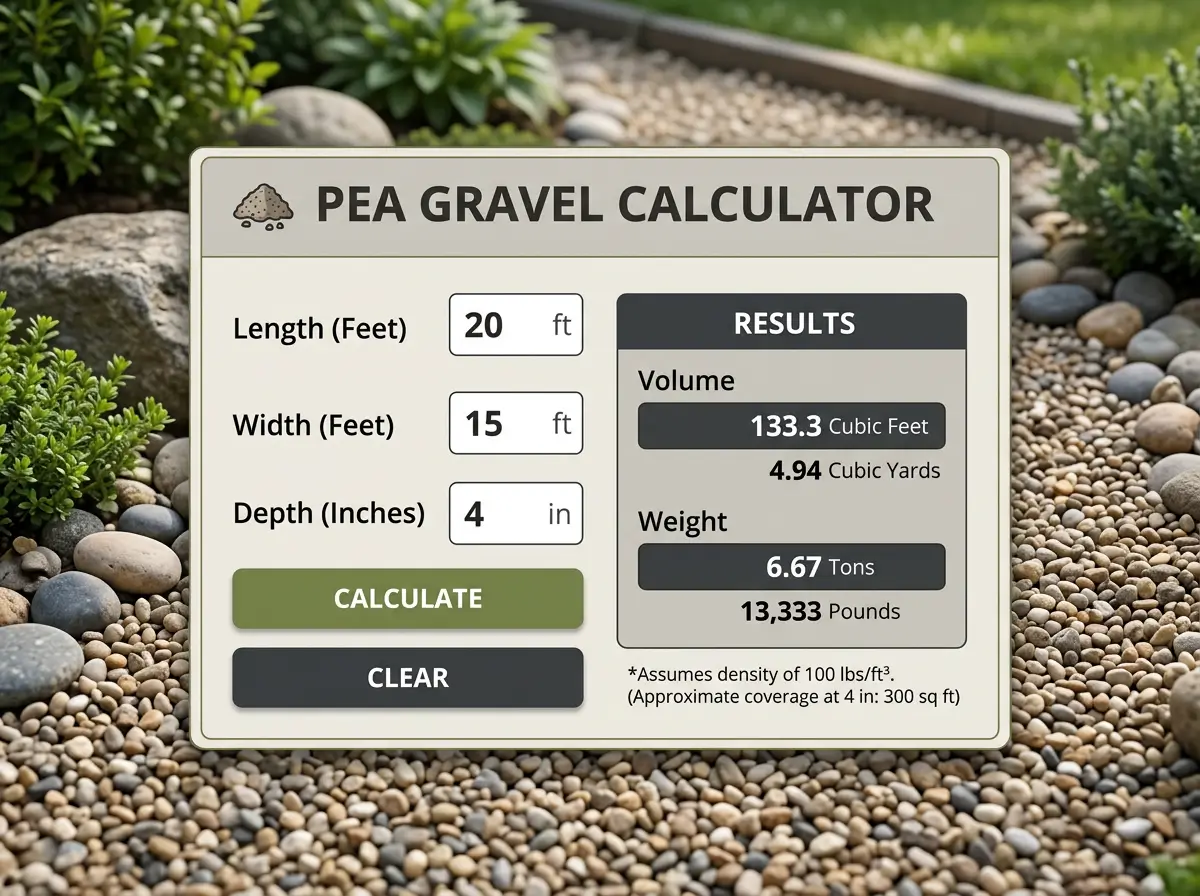
Pea Gravel Calculator
Free pea gravel calculator — estimate how much pea gravel you need by area and depth. Get instant results in cubic yards, cubic feet, tons, lbs, kg, and 50-lb bags. Supports rectangle, circle, and custom area input with optional cost estimate.

Fuel Cost Calculator
Estimate your trip's fuel cost based on distance, fuel efficiency, and gas price. Supports miles, km, MPG, L/100km, km/L, per gallon, and per liter. Includes round-trip mode and vehicle presets.
Gravel Calculator
Free gravel calculator — estimate how much gravel you need by area and depth. Instant results in cubic yards, cubic feet, tons, lbs, kg, and bags. Supports rectangle, circle, and total-area input with material density presets and optional cost.
Mulch Calculator
Free mulch calculator — estimate how much mulch you need by area and depth. Instant results in cubic yards, cubic feet, 2-cu-ft bags, and weight. Supports rectangle, circle, and total-area input with mulch types and optional cost.