BTU Calculator
Calculate the perfect heating or cooling capacity for your space. Accurate estimates based on room dimensions, insulation, and climate.
AC Sizing
Cooling capacity for AC units
Heating Load
Heater BTU requirements
Smart Factors
Climate & insulation adjustments
1 Dimensions
2 Usage
3 Environment
📊 BTU Requirements by Area Size
This table shows the typical cooling capacity needed based on room size, as provided by EnergyStar.gov.
| Area (sq ft) | Area (sq m) | BTU/hour Needed |
|---|---|---|
| 100 to 150 | 9 to 14 | 5,000 |
| 150 to 250 | 14 to 23 | 6,000 |
| 250 to 300 | 23 to 28 | 7,000 |
| 300 to 350 | 28 to 33 | 8,000 |
| 350 to 400 | 33 to 37 | 9,000 |
| 400 to 450 | 37 to 42 | 10,000 |
| 450 to 550 | 42 to 51 | 12,000 |
| 550 to 700 | 51 to 65 | 14,000 |
| 700 to 1,000 | 65 to 93 | 18,000 |
| 1,000 to 1,200 | 93 to 111 | 21,000 |
| 1,200 to 1,400 | 111 to 130 | 23,000 |
| 1,400 to 1,500 | 130 to 139 | 24,000 |
| 1,500 to 2,000 | 139 to 186 | 30,000 |
| 2,000 to 2,500 | 186 to 232 | 34,000 |
🔥 What is a BTU?
The British Thermal Unit (BTU) is a unit of energy. It is approximately the energy needed to heat one pound of water by 1 degree Fahrenheit.
BTU Conversions
- • 1 BTU = 1,055 joules
- • 1 BTU = 252 calories
- • 1 BTU = 0.293 watt-hours
- • 1 watt ≈ 3.412 BTU/hour
- • 1 ton (cooling) = 12,000 BTU/hour
Why BTU Matters
- • Measures heating/cooling capacity
- • Helps size AC units correctly
- • Compares energy efficiency
- • Used for fuel comparisons
- • Standard for HVAC industry
⚙️ Factors Affecting BTU Requirements
📐 Size and Ceiling Height
Larger rooms require more BTUs to cool/heat. High ceilings increase the volume of air that needs to be conditioned. Standard calculations assume 8-foot ceilings; taller ceilings may require 10-25% more capacity.
🏠 Insulation Condition
Thermal insulation reduces heat transfer between inside and outside. Newer homes typically have better insulation. Poor insulation (older homes, many windows) can increase BTU needs by 30% or more. Double-glazed windows significantly improve insulation.
☀️ Sun Exposure
Rooms receiving direct sunlight require more cooling. South and west-facing rooms in the Northern Hemisphere get the most sun. Heavily shaded rooms need less cooling capacity. Consider using blinds or curtains to reduce solar heat gain.
👥 Number of People
Each person generates approximately 400-600 BTU of heat per hour. More occupants mean more cooling needed and less heating required. Kitchens with cooking appliances generate additional heat.
🌡️ Climate and Temperature Difference
Extreme climates require more BTUs. A Boston home in winter may need to increase temperature by 80°F (from -5°F to 75°F). A Houston home in summer may need to cool by 20-30°F. The greater the temperature difference, the more BTUs required.
Sizing Heating and Cooling Capacity
An oversized AC cools the room too quickly without properly dehumidifying. This leads to a cold, clammy feeling, short cycling (frequent on/off), higher energy bills, and reduced equipment lifespan.
An undersized AC will run constantly, struggle to reach the desired temperature, consume excessive energy, and wear out faster. It may never adequately cool the space on very hot days.
Use the General Purpose calculator. Determine the temperature difference between the coldest outdoor temperature and your desired indoor temperature. For example, if it's -5°F outside and you want 75°F inside, the temperature increase is 80°F.
BTU is a unit of energy, while BTU/h (BTU per hour) is a rate of energy transfer. When shopping for AC units, the BTU rating typically refers to BTU/h - the cooling capacity per hour.
A rough rule of thumb is 20 BTU per square foot for cooling. However, this varies based on climate, insulation, sun exposure, and other factors. Use this calculator for a more accurate estimate.
One ton of cooling equals 12,000 BTU/hour. This term comes from the amount of heat needed to melt one ton of ice in 24 hours. Central AC systems are often rated in tons (e.g., a 3-ton system = 36,000 BTU/h).
📚 References & Standards
This calculator follows industry-standard methodologies and data from reputable energy organizations.
- 🔹Energy Star (US EPA):Base cooling capacity recommendations based on square footage.View Guidelines
- 🔹ASHRAE (American Society of Heating, Refrigerating and Air-Conditioning Engineers):Thermal comfort standards and load calculation principles.
- 🔹U.S. Department of Energy (DOE):Heating and cooling efficiency guidelines.
Related Tools
Useful tools selected for this workflow

Concrete Calculator
Calculate the volume of concrete needed for your project. Perfect for calculating the volume of concrete needed for your project.
Tire Size Calculator
Calculate tire dimensions, compare tire sizes, and understand tire codes. Free online tire size calculator with diameter, circumference, and speedometer calibration.
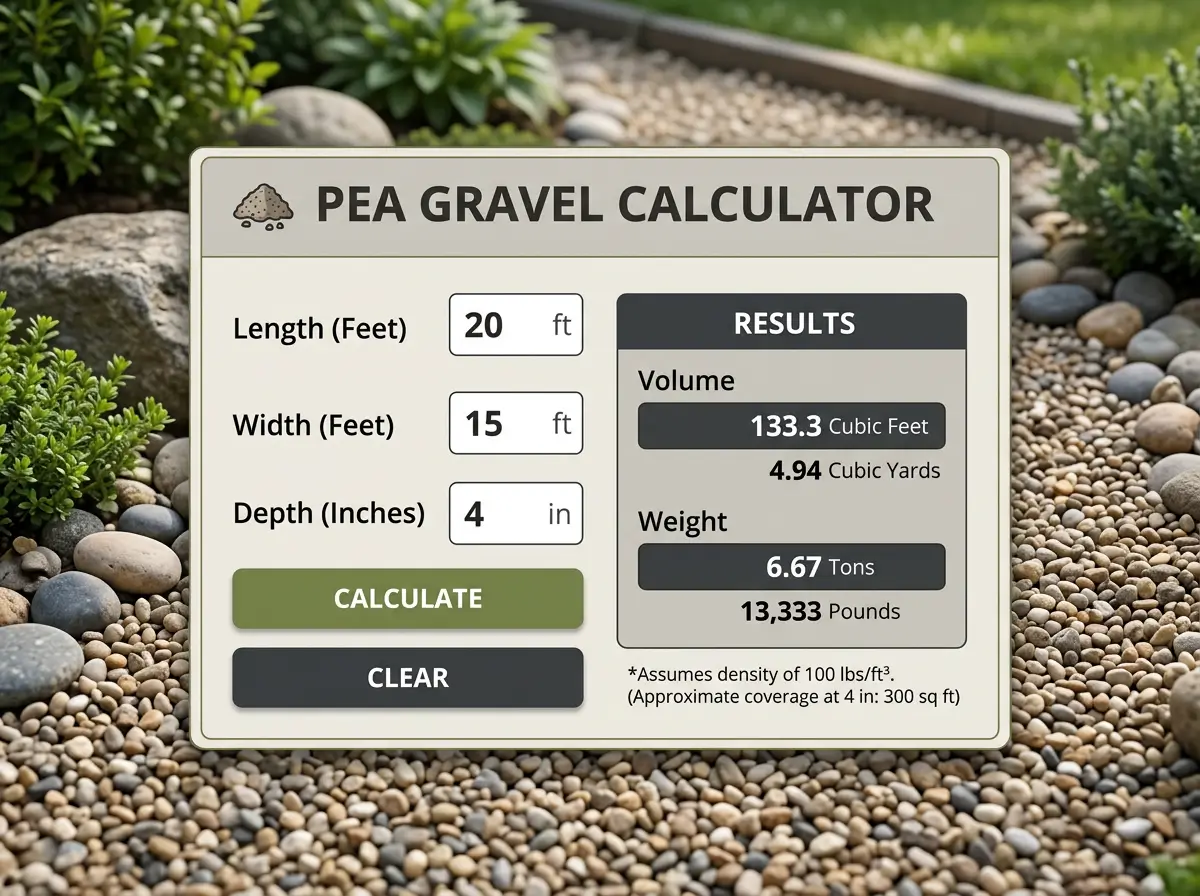
Pea Gravel Calculator
Free pea gravel calculator — estimate how much pea gravel you need by area and depth. Get instant results in cubic yards, cubic feet, tons, lbs, kg, and 50-lb bags. Supports rectangle, circle, and custom area input with optional cost estimate.

Fuel Cost Calculator
Estimate your trip's fuel cost based on distance, fuel efficiency, and gas price. Supports miles, km, MPG, L/100km, km/L, per gallon, and per liter. Includes round-trip mode and vehicle presets.

Gravel Calculator
Free gravel calculator — estimate how much gravel you need by area and depth. Instant results in cubic yards, cubic feet, tons, lbs, kg, and bags. Supports rectangle, circle, and total-area input with material density presets and optional cost.

Mulch Calculator
Free mulch calculator — estimate how much mulch you need by area and depth. Instant results in cubic yards, cubic feet, 2-cu-ft bags, and weight. Supports rectangle, circle, and total-area input with mulch types and optional cost.