Fuel Cost Calculator
Estimate your trip's fuel cost based on distance, fuel efficiency, and gas price. Supports miles, kilometers, MPG, L/100km, km/L, and more.
Trip Cost
Instant fuel cost estimate
Multi-Unit Support
Miles, km, MPG, L/100km, km/L
Savings Tips
Ways to reduce your fuel costs
1 Trip Distance
2 Fuel Efficiency
3 Gas / Fuel Price
Quick vehicle presets
📊 Typical Fuel Efficiency by Vehicle Type
Use these reference values if you don't know your vehicle's fuel efficiency rating.
| Vehicle Type | MPG (US) | L/100km | km/L |
|---|---|---|---|
| ⚡ Electric (MPGe) | 100+ | < 2.4 | 42+ |
| 🔋 Plug-in Hybrid | 55–100 | 2.4–4.3 | 22–42 |
| ♻️ Full Hybrid | 45–60 | 3.9–5.2 | 19–24 |
| 🚗 Compact / Economy Car | 30–40 | 5.9–7.8 | 12.8–17 |
| 🚙 Mid-size Sedan | 24–32 | 7.4–9.8 | 10.2–13.6 |
| 🚐 Crossover SUV | 22–28 | 8.4–10.7 | 9.4–12 |
| 🚗 Full-size SUV | 16–22 | 10.7–14.7 | 6.8–9.5 |
| 🛻 Light Pickup Truck | 18–24 | 9.8–13.1 | 7.6–10.2 |
| 🚚 Large / HD Pickup Truck | 12–17 | 13.8–19.6 | 5.1–7.2 |
| 🚌 RV / Motorhome | 8–14 | 16.8–29.4 | 3.4–6 |
| 🏍️ Motorcycle | 45–65 | 3.6–5.2 | 19–27 |
💡 How to Reduce Your Fuel Costs
The average American driver spends about $3,000 per year on gas. Here are proven ways to lower that number.
🚌 Use Public Transportation or Carpool
Public transport and carpooling dramatically cut per-person fuel costs. Even sharing a ride twice a week can save hundreds of dollars per year. Many cities now offer subsidized transit passes through employers.
🚗 Drive a More Fuel-Efficient Vehicle
Switching from a large SUV (18 MPG) to a compact sedan (35 MPG) can cut fuel costs nearly in half. Hybrid or electric vehicles offer even greater savings on a per-mile basis.
🔧 Keep Your Engine Tuned
A properly tuned engine can improve gas mileage by up to 4%. Fixing a faulty oxygen sensor alone can improve MPG by as much as 40%. Regular oil changes with the manufacturer-recommended grade improve efficiency by 1–2%.
🛞 Maintain Correct Tire Pressure
Properly inflated tires reduce fuel consumption by up to 3%. Tires lose about 1 PSI per month naturally, and cold weather causes further pressure drops. Check tire pressure at least monthly and inflate to the car manufacturer's recommendation (not the number stamped on the tire).
🗺️ Plan Your Route Carefully
Shorter routes, fewer stops, and highways over city streets all improve fuel efficiency. GPS apps can optimize routes to minimize traffic and idle time. Combining multiple errands into one trip also saves significantly on fuel.
🐢 Drive at Optimal Speed
Most vehicles achieve peak fuel efficiency between 45–60 mph (72–96 km/h). Aggressive acceleration, hard braking, and highway speeds above 70 mph (113 km/h) significantly reduce MPG. Smooth, steady driving can improve fuel economy by 15–30%.
⚙️ Factors That Determine the Fuel Price
Governments can raise fuel prices through taxation or lower them through subsidies. Fuel taxes vary widely by country and state — for example, California's gas taxes are among the highest in the US, while some Middle Eastern nations heavily subsidize fuel.
The price of crude oil — quoted as Brent or West Texas Intermediate (WTI) in USD per barrel — is the primary driver of retail gasoline prices. OPEC+ production decisions, global demand shifts, and speculative trading all influence crude prices daily.
Regions close to oil production and refining hubs generally enjoy lower fuel prices. Remote or island locations face higher costs due to transportation logistics. Within the US, prices vary by up to $2/gallon between states due to taxes, regulations, and proximity to refineries.
Hurricanes, earthquakes, and floods can damage refineries and disrupt supply chains, causing sudden price spikes. Hurricane Katrina (2005) caused US gasoline prices to jump over $0.40/gallon in a matter of days by knocking out Gulf Coast refining capacity.
Summer-blend gasoline (required in many US states from June–September) is more expensive to produce due to stricter emissions requirements. Refinery outages, planned maintenance, or capacity constraints also push prices higher during high-demand periods.
Fuel Economy Units and Trip-Cost Assumptions
Enter your trip distance, your vehicle's fuel efficiency, and the current gas price. The calculator converts all values to a common unit system (liters and kilometers internally) and computes: Fuel Used = Distance ÷ Efficiency, then Cost = Fuel Used × Price. Results are shown in your original units alongside equivalent metric values.
MPG (miles per gallon) is the US standard — higher is better. L/100km (liters per 100 kilometers) is the metric standard used in most other countries — lower is better. To convert: L/100km = 235.214 ÷ MPG. For example, 30 MPG ≈ 7.8 L/100km.
Check your vehicle's owner manual, the window sticker (Monroney label) on new cars, or visit fueleconomy.gov (US) for official EPA ratings by make, model, and year. You can also calculate your real-world MPG by tracking fill-ups: miles driven ÷ gallons used.
Real-world MPG can vary 10–30% from official EPA ratings due to driving style (aggressive acceleration/braking), speed (highway vs. city), weather (cold temps reduce efficiency), cargo weight, AC usage, and road conditions. This calculator uses the efficiency value you provide, so entering your real-world MPG (calculated from recent fill-ups) gives the most accurate estimate.
Enter the total road trip distance (use Google Maps or similar to get the driving distance), your vehicle's fuel efficiency, and the average gas price along your route. Enable "Round Trip" if you're returning the same way. For multi-leg trips, calculate each leg separately and sum the costs.
According to the American Automobile Association (AAA), the average American driver spends approximately $3,000 per year on gasoline. This varies by driving habits, vehicle type, and local gas prices. At 15,000 miles/year and 28 MPG, a driver using $3.50/gallon gas would spend about $1,875/year — actual costs depend heavily on your specific situation.
Related Tools
Useful tools selected for this workflow

Concrete Calculator
Calculate the volume of concrete needed for your project. Perfect for calculating the volume of concrete needed for your project.
Tire Size Calculator
Calculate tire dimensions, compare tire sizes, and understand tire codes. Free online tire size calculator with diameter, circumference, and speedometer calibration.

BTU Calculator
Calculate BTU requirements for heating and cooling. Estimate AC BTU needs for rooms and houses based on size, insulation, climate, and other factors.
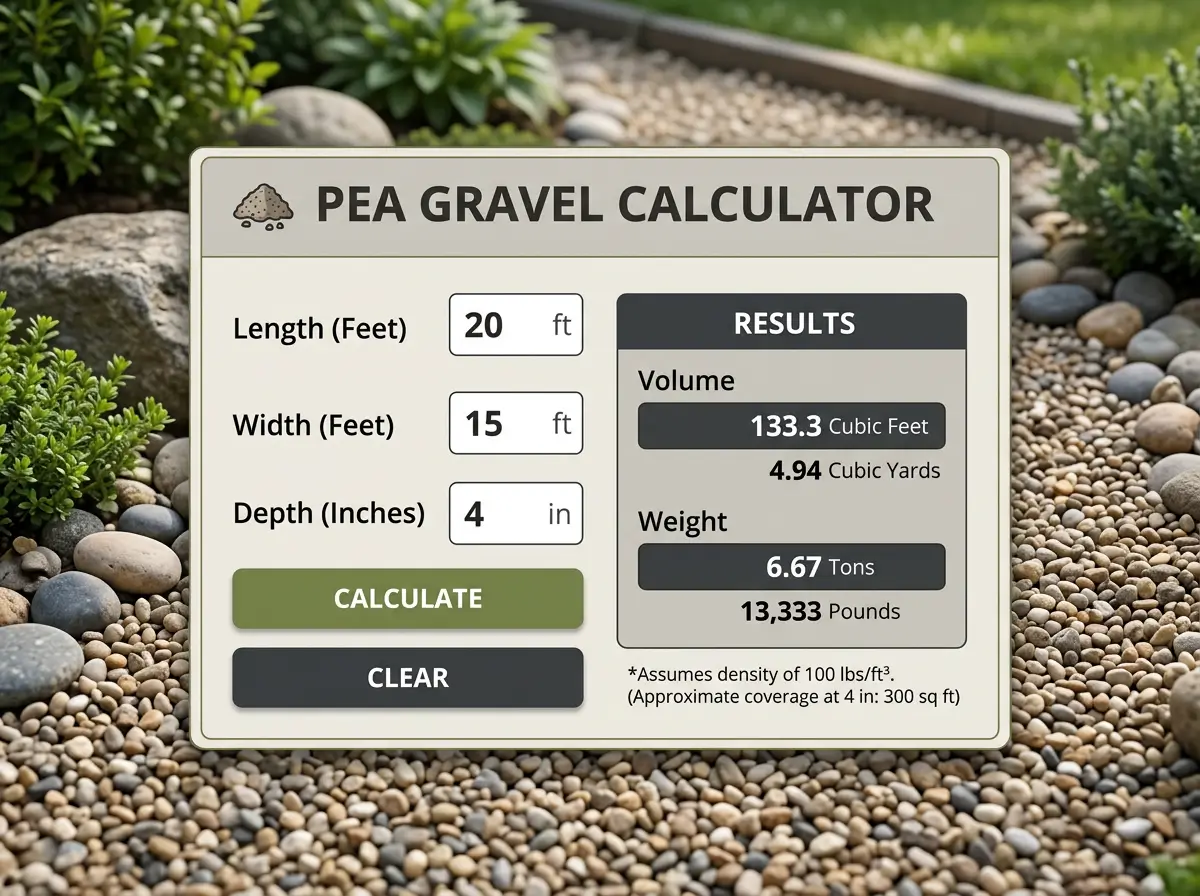
Pea Gravel Calculator
Free pea gravel calculator — estimate how much pea gravel you need by area and depth. Get instant results in cubic yards, cubic feet, tons, lbs, kg, and 50-lb bags. Supports rectangle, circle, and custom area input with optional cost estimate.
Gravel Calculator
Free gravel calculator — estimate how much gravel you need by area and depth. Instant results in cubic yards, cubic feet, tons, lbs, kg, and bags. Supports rectangle, circle, and total-area input with material density presets and optional cost.

Mulch Calculator
Free mulch calculator — estimate how much mulch you need by area and depth. Instant results in cubic yards, cubic feet, 2-cu-ft bags, and weight. Supports rectangle, circle, and total-area input with mulch types and optional cost.