Mulch Calculator
Find out how much mulch you need for garden beds, borders, and landscaping. Enter your area and depth for instant results in cubic yards, cubic feet, 2‑cu‑ft bags, and weight — with an optional cost estimate.
Project Details
Live Results
📐 How the Mulch Calculator Works
- • Wood / bark mulch: ~400 kg/m³ (~25 lbs/ft³)
- • Hardwood mulch: ~475 kg/m³ (~30 lbs/ft³)
- • Pine bark / straw: ~350 kg/m³ (~22 lbs/ft³)
- • Compost: ~550 kg/m³ · Rubber: ~480 kg/m³
- • 1 yd³ = 27 ft³ = 13.5 bags (2 cu ft)
- • 1 m³ = 1,000 L = 35.31 ft³
- • 1 ft = 12 in = 0.3048 m
- • 1 inch = 2.54 cm
🌿 Types of Mulch
Mulch is any material spread over soil to retain moisture, suppress weeds, and regulate temperature. It splits into organic types (which break down and feed the soil) and inorganic / synthetic types (which last longer but add no nutrients). Pick the type in the calculator that matches your project — bulk density varies, which changes the weight and bag count.
The most common mulch. Shredded bark or wood chips that decompose slowly, improve soil, and look tidy in beds and borders.
Lightweight and slightly acidic — great for acid-loving plants like azaleas, rhododendrons, and blueberries.
Free organic mulch from your own yard. Shred leaves first so they don’t mat; let grass clippings dry before spreading.
Nutrient-rich and dark. Doubles as a soil amendment, though it breaks down fast and may need topping up each season.
Recycled tire crumb. Long-lasting and good for playgrounds and paths, but adds no nutrients and can retain heat.
Inorganic and permanent. Best for drainage areas and xeriscaping where you don’t want decomposition.
Benefits of Mulch
A 2–3" layer slows evaporation so soil stays moist longer, cutting how often you need to water.
Blocks light from weed seeds. Pair with landscape fabric on paths for near-total weed control.
Insulates roots — keeping soil cooler in summer and protecting against frost heave in winter.
Stops soil-borne spores from splashing onto leaves during rain, reducing many fungal diseases.
Organic mulches break down into humus, feeding earthworms and microbes that build fertile soil.
A fresh layer gives beds a clean, finished look and defines borders and pathways.
Quick Coverage Guide
Mulch Depth, Coverage, and Bag Estimates
Multiply your bed area by the depth to get volume. This calculator does it for you — enter length and width (or total area) and depth, and read the result in cubic yards, cubic feet, and 2-cu-ft bags.
For most beds, 2–3 inches is ideal — enough to suppress weeds and hold moisture without smothering roots. Use 3–4 inches for heavy weed areas, and keep mulch a few inches away from plant stems and tree trunks.
A cubic yard is 27 ft³, so it equals about 13.5 bags of the standard 2-cubic-foot size. For large beds, bulk mulch by the yard is usually much cheaper than bags.
Bulk mulch typically runs $30–$60 per cubic yard; bagged mulch is about $3–$6 per 2-cu-ft bag. Dyed and premium hardwood blends cost more. Enter your price for an instant estimate; delivery is usually extra.
One cubic yard covers about 324 ft² at 1", 162 ft² at 2", or 108 ft² at 3" deep. The calculator works backward from your exact area and depth.
Organic mulch (bark, wood, compost) improves soil as it decomposes but must be refreshed yearly. Rubber mulch lasts much longer and suits playgrounds, but adds no nutrients and can hold heat — choose based on whether feeding the soil matters for the spot.
Switch to Circle mode and enter the diameter. The tool uses π × (d÷2)² × depth. A 10 ft-diameter bed at 3" deep needs about 0.73 yd³ (~10 bags).
Related Tools
Useful tools selected for this workflow
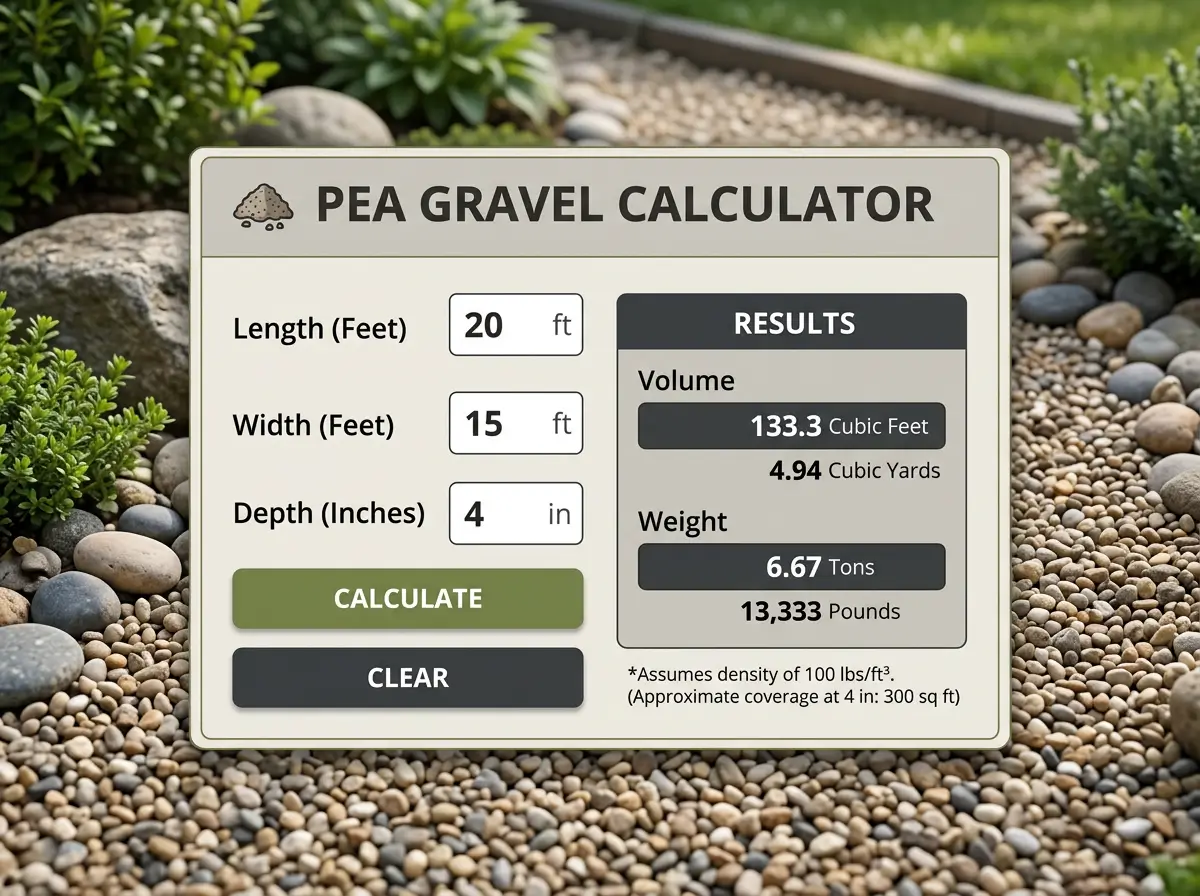
Pea Gravel Calculator
Free pea gravel calculator — estimate how much pea gravel you need by area and depth. Get instant results in cubic yards, cubic feet, tons, lbs, kg, and 50-lb bags. Supports rectangle, circle, and custom area input with optional cost estimate.
Gravel Calculator
Free gravel calculator — estimate how much gravel you need by area and depth. Instant results in cubic yards, cubic feet, tons, lbs, kg, and bags. Supports rectangle, circle, and total-area input with material density presets and optional cost.
Concrete Calculator
Calculate the volume of concrete needed for your project. Perfect for calculating the volume of concrete needed for your project.
Tire Size Calculator
Calculate tire dimensions, compare tire sizes, and understand tire codes. Free online tire size calculator with diameter, circumference, and speedometer calibration.

BTU Calculator
Calculate BTU requirements for heating and cooling. Estimate AC BTU needs for rooms and houses based on size, insulation, climate, and other factors.

Fuel Cost Calculator
Estimate your trip's fuel cost based on distance, fuel efficiency, and gas price. Supports miles, km, MPG, L/100km, km/L, per gallon, and per liter. Includes round-trip mode and vehicle presets.