Tile Calculator
Calculate how many tiles you need for your flooring or wall project. Includes grout spacing and waste factor calculations.
Tile Quantity Calculator
Area Dimensions
Tile Size
Spacing & Extras
🔲 Understanding Grout Lines
Grout lines (or grout gaps) are the spaces between tiles filled with grout, a form of concrete. The size of grout lines affects both the aesthetics and the number of tiles needed for your project.
Common Grout Sizes
- 1/16" (1.6mm): Rectified tiles, minimal lines
- 1/8" (3mm): Standard floor tiles
- 1/4" (6mm): Rustic or uneven tiles
- 1/2" (12mm): Stone or irregular tiles
Grout Gap Tips
- Smaller gaps = less grout visibility
- Larger gaps = better for uneven tiles
- Negative values = overlapping tiles (roof/siding)
- Check manufacturer recommendations
📐 How Tile Calculation Works
Step 1: Calculate Total Area
Example: 12 ft × 10 ft = 120 square feet
Step 2: Calculate Tile Coverage
Example: (12" + 0.125") × (12" + 0.125") = 147.0 sq in
Step 3: Calculate Tiles Needed
Example: 17,280 sq in ÷ 147.0 sq in = 118 tiles
Step 4: Add Waste Factor
Example: 118 × (1 + 10%) = 130 tiles
Tile Quantity, Layout Waste, and Grout Estimates
For standard straight installations, add 10% for waste and future repairs. For diagonal patterns, complex layouts, or rooms with many corners, add 15% or more. It's always better to have extra tiles than to run short.
For rectified tiles (uniform size), use 1/16" (1.6mm). For standard floor tiles, use 1/8" (3mm). For natural stone or irregular tiles, use 1/4" to 1/2" (6-12mm). Always check the tile manufacturer's recommendations.
Yes! This calculator works for both floor and wall tiles. For walls, you may need to account for trim pieces at edges and corners. Wall tiles typically use narrower grout gaps (1/16") compared to floor tiles.
For overlapping tiles (common in roofing or siding), enter a negative value for the grout gap. For example, if tiles overlap by 1 inch, enter -1. The calculator will adjust the coverage area accordingly.
Popular tile sizes include: 12"×12" (most common), 18"×18", 24"×24" for large format, 6"×6" and 8"×8" for smaller spaces, and 3"×6" subway tiles. Square tiles are easiest to install, while rectangular tiles can make spaces look larger.
Absolutely! Tile batches can vary in color and finish. Even with the same product code, tiles from different production runs may not match exactly. Buy at least 10% extra and keep them in storage for future repairs.
Related Tools
Useful tools selected for this workflow

Concrete Calculator
Calculate the volume of concrete needed for your project. Perfect for calculating the volume of concrete needed for your project.
Tire Size Calculator
Calculate tire dimensions, compare tire sizes, and understand tire codes. Free online tire size calculator with diameter, circumference, and speedometer calibration.

BTU Calculator
Calculate BTU requirements for heating and cooling. Estimate AC BTU needs for rooms and houses based on size, insulation, climate, and other factors.
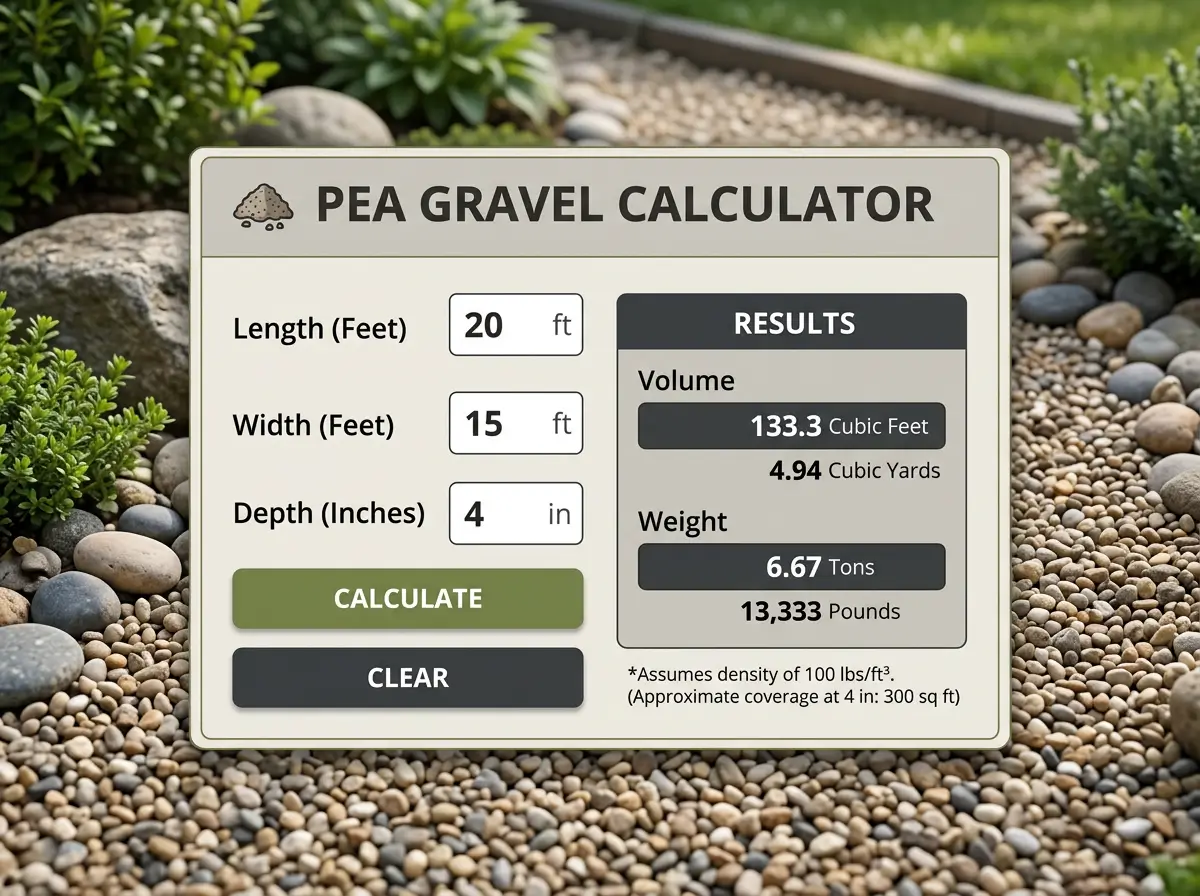
Pea Gravel Calculator
Free pea gravel calculator — estimate how much pea gravel you need by area and depth. Get instant results in cubic yards, cubic feet, tons, lbs, kg, and 50-lb bags. Supports rectangle, circle, and custom area input with optional cost estimate.

Fuel Cost Calculator
Estimate your trip's fuel cost based on distance, fuel efficiency, and gas price. Supports miles, km, MPG, L/100km, km/L, per gallon, and per liter. Includes round-trip mode and vehicle presets.
Gravel Calculator
Free gravel calculator — estimate how much gravel you need by area and depth. Instant results in cubic yards, cubic feet, tons, lbs, kg, and bags. Supports rectangle, circle, and total-area input with material density presets and optional cost.